Winter Garden's New Permit Law Skips the Building Department. It Doesn't Skip the Historic Preservation Board.
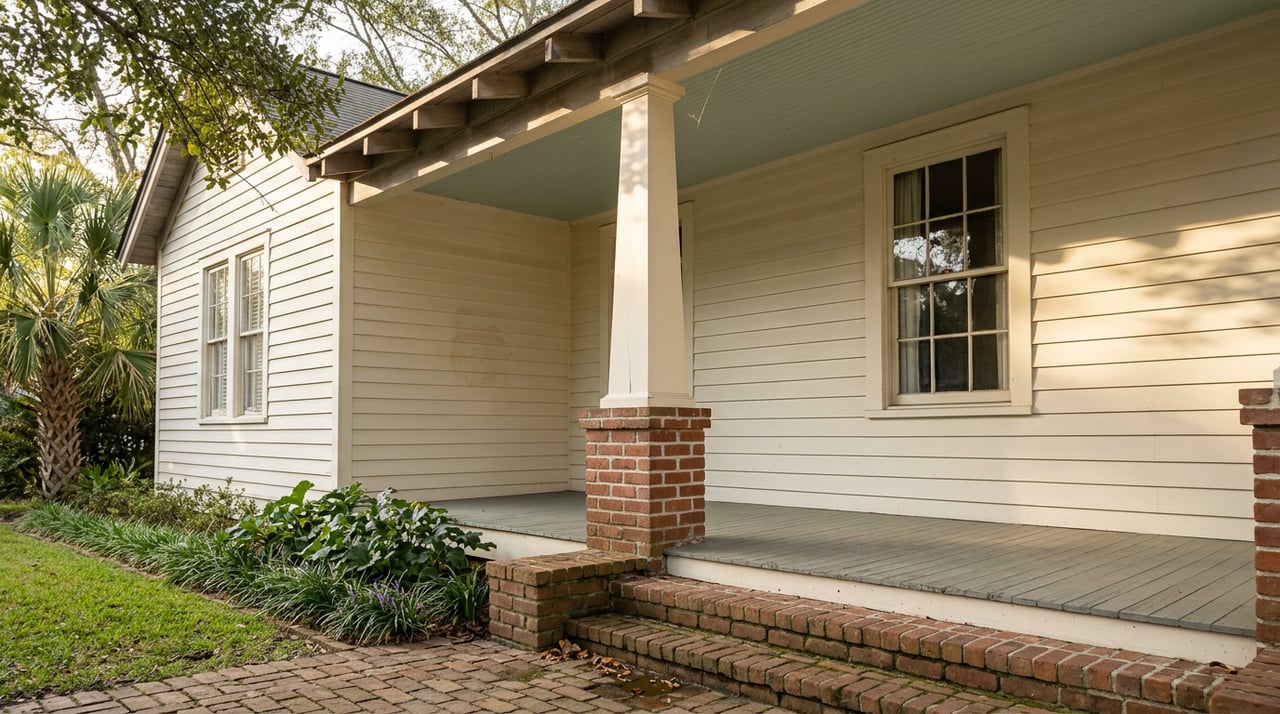
Say you own a 1928 bungalow two blocks off Plant Street. Florida's new permit law just went into effect, and you've read the headlines: work under $7,500 no longer needs a building permit. You've got a siding repair and a window swap that pencil out to about $6,800. You call a contractor, skip the permit application, and start work on a Tuesday.
By Thursday, someone from the city has called about the historic overlay. Not because you needed a building permit. Because you didn't get a design review first, and in Winter Garden's historic district those are two different requirements enforced by two different offices.
That gap, between what the state just waived and what the city still controls, is the thing worth understanding before you touch a historic-district exterior in 2026. It matters whether you're renovating to stay or preparing to sell.
Florida's HB 803 was signed by Governor DeSantis in May 2026 and took effect July 1, 2026. The headline provision exempts single-family residential work valued under $7,500 from the requirement to pull a building permit. That is a real change, and it applies statewide, including in Winter Garden.
But the exemption has edges. It does not cover electrical, plumbing, structural, mechanical, or gas work, regardless of cost. It does not apply to properties in a designated flood hazard area. It does not let you split one $12,000 project into two $6,000 invoices to dodge the threshold, the law explicitly prohibits that. And even a qualifying project still requires a written request to the local building official describing the scope and value of the work. The exemption is opt-in paperwork, not a free pass to skip city contact entirely.
The law also does something separate from the dollar threshold: it bars homeowners associations from requiring a building permit before an architectural review committee will even look at a project. That provision matters for anyone in an HOA-governed community elsewhere in Winter Garden, but it is not the provision that governs the historic overlay, because the historic overlay is not an HOA. It is a city ordinance.
Winter Garden created its Architectural Review and Historic Preservation Board in 2009, and the City Commission adopted Ordinance 10-05 on January 11, 2010, establishing a Historic Downtown Architectural Overlay covering roughly 116 acres and 270 residential and commercial properties. The overlay sets standards for major improvements, renovations, redevelopment, and new construction inside its boundary, which traces back to a district whose oldest buildings date to around 1890 and whose historic development runs through 1945.
That board isn't a rubber stamp for building permits. It's a design-review body, and design review is a zoning function, not a permitting function. The city's own building department separates the two on its website: questions about permits go to the Building Division, but questions about "structures located in the historical district" get routed to Planning and Zoning instead. Multiple legal breakdowns of HB 803 make the same distinction from the other direction, noting that the law's permit waiver does not eliminate zoning requirements or other local regulations unrelated to building permits. Setbacks, fence rules, landscaping standards, and historic-overlay design review all sit in that separate lane.
Put plainly: HB 803 tells the Building Division it can't require a permit for your sub-$7,500 job. It says nothing about whether the Historic Preservation Board still expects to see your siding color, your window profile, or your fence material before you install it, because that review was never a building permit to begin with.
| Waived by HB 803 (statewide, effective July 1, 2026) | Still runs through the City | |
|---|---|---|
| Building permit for work under $7,500 | Yes, with written notice to the building official | N/A |
| Electrical, plumbing, structural, mechanical, gas work | No, still requires a permit at any cost | Same |
| Work in a flood hazard area | No, exemption does not apply | Same |
| HOA gatekeeping a permit before architectural review | Prohibited by the same law | N/A |
| Historic overlay design review (Ordinance 10-05) | Not addressed, HB 803 governs permits, not zoning | Runs through Planning and Zoning and the Historic Preservation Board |
The overlay isn't bureaucratic friction for its own sake. It's tied to a downtown that spent the early 1990s mostly empty. The Winter Garden Heritage Foundation restored the Garden Theatre in 2008, a 1935 movie palace that had closed in 1963 and spent roughly four decades functioning as a tractor warehouse before anyone thought to save it. The West Orange Trail runs through the same corridor now, and the district's brick storefronts and residential streets are part of what makes downtown Winter Garden read as a place rather than a strip. The seven-member board that reviews changes inside the overlay includes an architect, a licensed general contractor, a Winter Garden Heritage Foundation member, a commercial property owner from within the historic district, a resident property owner from the district, and two additional city residents. It is a small, specific group, and it is the group that decides whether your new siding fits the street.
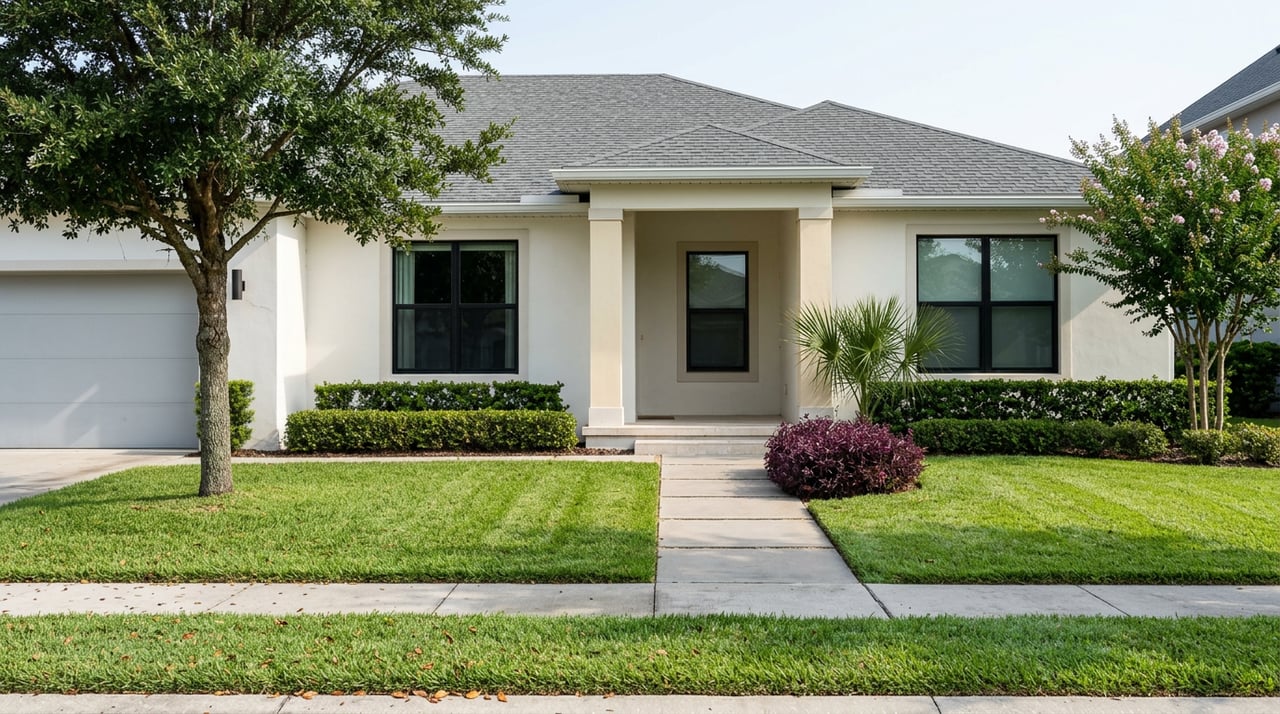
The practical split for buyers and sellers: original residential streets like Tremaine, Boyd, and Lakeview sit inside the overlay and carry these design considerations on top of anything HB 803 changed. Newer surrounding communities like Stoneybrook West, Westfield Lakes, and Hamilton Gardens sit outside the historic boundary entirely, where the $7,500 exemption applies far more cleanly, subject only to any HOA architectural rules that community might have.
The Florida House's own summary of the bill frames its intent this way, describing a law meant to bring "accountability, transparency, and fairness back into the building process." That's a fair description of what HB 803 does to permit timelines and fees. It says nothing about historic design standards, because that was never the target.
None of this touches the mechanical reality of owning an older Winter Garden home, and that reality shows up at inspection regardless of which permit rules apply. Local inspectors who work this housing stock consistently flag the same handful of items in the downtown core: aging electrical panels, including knob-and-tube wiring and Federal Pacific panels in some pre-1960s homes, along with galvanized plumbing and original roofing. One local inspection firm that covers the historic downtown alongside Stoneybrook West, Westfield Lakes, and Hamilton Gardens treats these as standard findings on anything built in the early to mid-20th century. Another local inspector who works from Plant Street out to the newer communities around Stoneybrook flags cast-iron sewer lines specifically, noting that pipes installed before 1980 are approaching the end of a typical 25 to 50 year service life, and that a failing line can mean anything from a nuisance repair to a foundation problem.
None of that is exempt under HB 803, since electrical, plumbing, and structural work stays outside the waiver at any dollar value. If you're planning to sell a historic-district home in the next year, the inspection is going to find what it finds regardless of what happened with the siding permit. Budgeting for a panel upgrade or a sewer scope before listing tends to be cheaper than negotiating it after an offer.
Before starting exterior work on a historic-district property in 2026, a short sequence avoids most of the friction:
If you're weighing a historic-district purchase against something newer in Stoneybrook West or Westfield Lakes, the overlay isn't a reason to avoid downtown. It's a reason to build renovation timelines with an extra step in them. We've covered what daily life looks like inside that district separately, and it's worth reading alongside this if a historic-district home is genuinely on your list.
Does HB 803 mean I can skip city contact entirely for a sub-$7,500 project? No. The law still requires written notice to the local building official describing the work and its value, even when no permit is issued.
Is the Historic Preservation Board the same thing as an HOA architectural review committee? No. HB 803's HOA provision addresses private community associations. Winter Garden's Historic Preservation Board operates under a city zoning ordinance, which the law does not preempt.
Does the exemption apply to a historic-district home in a flood hazard area? No. HB 803 excludes flood hazard areas from the permit waiver regardless of project cost.
If you're weighing a purchase, a renovation, or a listing anywhere in Winter Garden's historic core or the newer communities around it, Nectar Real Estate can walk the specifics with you street by street. Start with a personalized home valuation and we'll help you separate what the new state law actually changes from what the city still expects.
Expertise isn’t just about knowing the market—it’s about dedication to every client’s unique goals. At Nectar Real Estate, we pride ourselves on our ability to combine deep local knowledge with an unwavering commitment to providing exceptional service.