
How to Sell a Winter Park Lakefront Home Strategically
If you are selling a lakefront home in Winter Park, you are not selling the same product as every other home on the market. Buyers are not just looking at square footage or finishes. They are weighing lake access, dock rights, canal connectivity, shoreline condition, and how the property fits the way they want to enjoy the water. That can feel like a lot to manage, especially when pricing and presentation need to be precise. The good news is that a thoughtful plan can help your home stand out for the right reasons. Let’s dive in.
Winter Park has a lake identity that shapes how buyers see the area. City documents note that Winter Park includes 19 lakes totaling 947.1 acres, and several are linked by navigable canals. That matters because buyers shopping lakefront here are often comparing not just homes, but also the experience each lake offers.
This is one reason lakefront in Winter Park behaves like a niche market. Public access is limited to city lakefront parks and public boat ramps, and the city gives special attention to the Chain of Lakes because of its visibility, recreation use, and concentration of lakefront homes. In simple terms, buyers know these properties are limited, and they tend to look closely at details.
Not all Winter Park lakefront homes offer the same lifestyle. A home on one lake may appeal to a buyer who wants boating and water skiing, while another may appeal more to someone who values privacy, calm views, or paddling access.
For example, Lake Maitland and Lake Osceola connect through navigable canals that provide access to a total of five lakes in Winter Park and Maitland. Lake Virginia is known for fishing and water skiing, and Dinky Dock Park includes a boat ramp, trailer parking, restrooms, and a no wake zone. On the other hand, Lake Sue does not have deepwater access to other lakes, and access to Lake Virginia may be limited to canoe or kayak during low water.
Some lakes have very different selling angles. Lake Knowles is noted by the city as a small, deep lake with consistently clear water, while Lake Forrest has no public access. Lake Killarney also has its own context, so it should not be marketed with the same boating story as every other lakefront pocket.
One of the biggest mistakes a seller can make is relying too heavily on broad Winter Park averages. Those numbers can help with market context, but they do not tell the full story of a waterfront property.
Realtor.com’s March 2026 snapshot shows Winter Park with 313 active listings, a median sale price of $565,500, 56 days on market, and a 97% sale-to-list ratio. In the broader Orlando area, ORRA reported 4.50 months of supply, 4,066 new listings, 2,539 sales, and a 6.3% average interest rate in April 2026.
That said, lakefront homes often sit in a very different pricing tier. In the 32789 ZIP code, Realtor.com reported a $1.3975 million median listing price, while ORRA monthly sold averages ranged from $1.63 million in December 2025 to $882,361 in January 2026. That swing shows how misleading broad averages can be when sample sizes are small.
For lakefront homes, value is usually driven by features that citywide medians cannot capture. Buyers often pay attention to:
Zillow’s waterfront research also draws an important distinction. A true waterfront property is one where the owner can reach the water without leaving the property. That means direct frontage, scenic views, and non-contiguous deeded access should not be treated as identical when pricing your home.
Before your home goes live, it helps to organize the documents buyers are likely to ask about. Winter Park requires shoreline permits for vegetation removal, docks and boathouses, and seawalls or rip-rap. The city also states that docks and boathouses must receive Lakes & Waterways Advisory Board site plan approval before building permits are issued.
If records are missing or incomplete, that can slow things down. The city notes that missing or incorrect information can delay permit processing, and some shoreline armoring work may also require an additional Florida Department of Environmental Protection permit.
Try to gather these items before your home hits the market:
Having this information ready can make your listing feel more complete and more credible. It also helps reduce uncertainty for serious buyers.
Even in Central Florida, winter selling season has its own rhythm. Seasonal light, landscaping condition, and how the water-facing side of the home presents can all influence a buyer’s first impression.
Winter Park’s lake resources place strong emphasis on stormwater and nutrient management because runoff can hurt water quality and contribute to harmful algal blooms. For sellers, that means visible upkeep matters. A clean shoreline, trimmed vegetation, a functioning dock, and a maintained seawall can signal responsible ownership.
When preparing your home, prioritize the parts buyers cannot ignore once they step outside:
These details do more than improve appearance. They help buyers picture the property as usable, cared for, and ready to enjoy.
With a lakefront property, your strongest marketing assets are often outside the four walls. Buyers want to understand the relationship between the home and the water as quickly as possible.
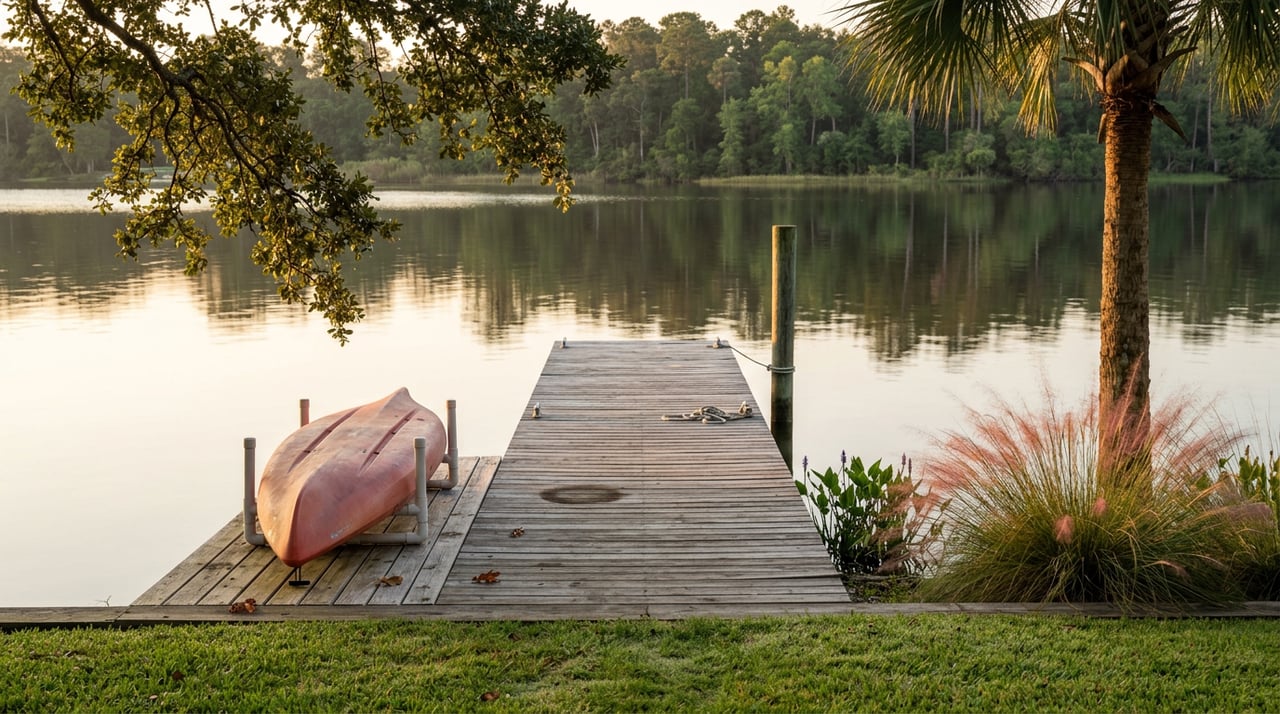
That is why visual strategy matters so much. Aerial photography, drone views, dock-level images, twilight shots, and clear photos of the shoreline can help show what makes the property special. If the lake is part of a connected system, that should be easy to understand in the marketing.
Your listing should clearly communicate:
This is also where lake-specific accuracy matters. Winter Park’s larger lakes may attract buyers who care about boating or skiing, while other locations may appeal more for privacy, views, or calmer water access. The best marketing meets buyers where the property actually fits.
Lakefront buyers are often choosing lifestyle first and house second. Some want boating convenience. Some want a quiet place to paddle. Others want the privacy and visual impact that only direct water frontage can offer.
That is why buyer targeting should stay focused on the experience your property provides. If your home has private dock access on a connected lake system, that should be front and center. If it offers scenic frontage on a more private or less connected lake, that should be framed clearly and honestly.
In a market like Winter Park, precision builds trust. The more accurately you present lake access, navigability, and shoreline improvements, the easier it becomes for the right buyer to recognize the value.
Selling a lakefront home in Winter Park takes more than a standard listing plan. You need pricing that reflects direct water access, preparation that accounts for shoreline features and permits, and marketing that shows buyers exactly why your property stands apart.
That is where boutique, detail-driven representation can make a real difference. From valuation strategy to polished visual presentation, the goal is to tell the full story of your home with clarity and confidence. If you are thinking about selling your Winter Park lakefront property, Keith Renner can help you create a tailored strategy that fits your home, your lake, and your timing.





Expertise isn’t just about knowing the market—it’s about dedication to every client’s unique goals. At Nectar Real Estate, we pride ourselves on our ability to combine deep local knowledge with an unwavering commitment to providing exceptional service.