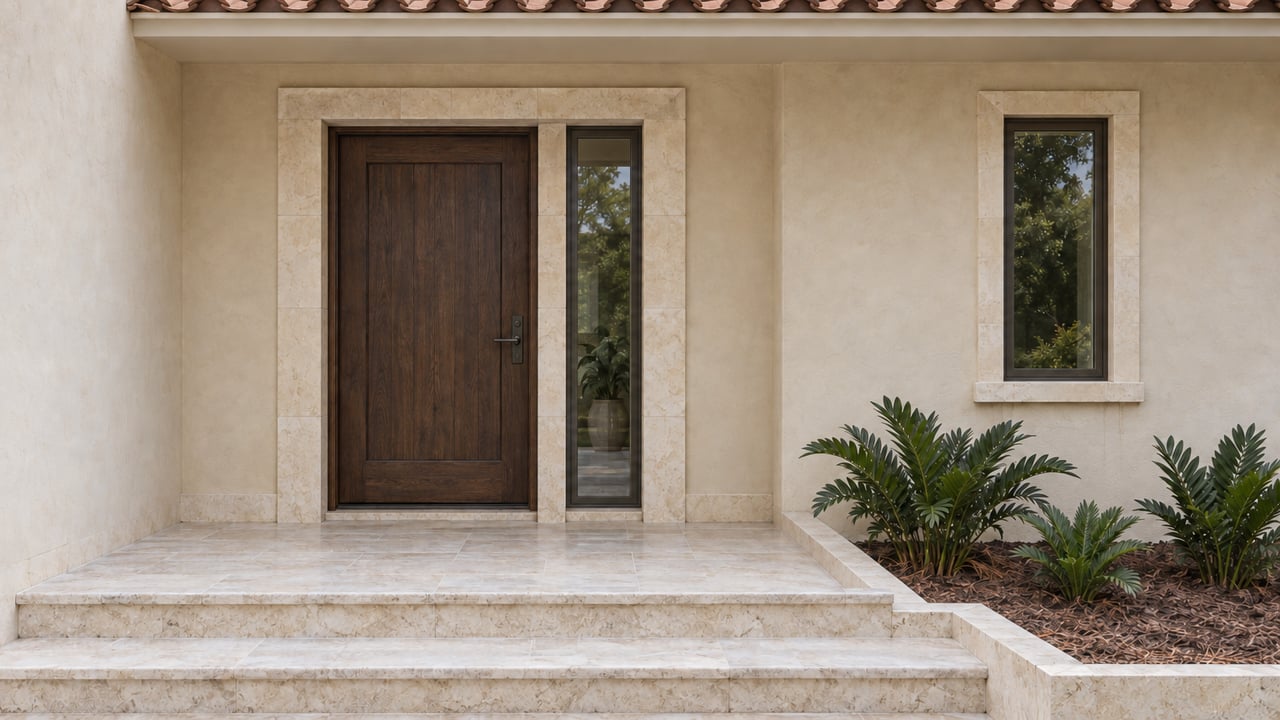
Selling in Golden Oak: What the Architectural Review Board Decides Before Your Buyer's Lender Does
A Golden Oak estate at 9742 Earle Court, a 2013-built house of roughly 3,713 square feet, sold on December 8, 2025 for $4.8 million after five days on the market. Five days, for a $4.8 million property inside Walt Disney World's only residential address, is fast by any luxury benchmark. It is almost unheard of in this specific community.
Set that number next to the aggregate. As of June 2026, average time on market for Golden Oak resales sat closer to 100 days. Same neighborhood, same buyer pool, a twenty-fold gap in how long it took to close.
The instinct is to explain that gap with price. Maybe the Earle Court sale was underpriced. Maybe the slower listings were reaching too high. That instinct is wrong here, or at least incomplete. In Golden Oak, the number on the sign is rarely what decides how fast a sale closes. What decides it is whether the paperwork was already moving before the home ever went live.
Every Golden Oak sale clears two approvals before a buyer's lender ever weighs in. The first is the architectural review board's sign-off on the home itself, confirming that whatever exists on the lot, and whatever the seller has recently changed about it, meets the community's design standards. The second is Disney's own sign-off on the transfer, since Disney, which has operated this community since its first phase opened, retains a green-light role over resales.
This isn't a formality dressed up as oversight. Even a courtesy tour of the community's own clubhouse runs through the same gatekeeping logic. Disney's official Golden Oak Club page states plainly:
Tours must be requested by Club members and approved at the sole discretion of the Golden Oak Club.
If showing a shared amenity space to a prospective buyer needs discretionary sign-off, a seller should assume nothing about the listing timeline is fully self-directed. The review culture that governs new construction in Golden Oak extends into the resale process at nearly every step.
Sellers preparing a Golden Oak home for market often schedule the same cosmetic work any luxury seller would: a pool resurfacing, an exterior repaint, a landscape regrade ahead of professional photography. In most Central Florida communities, that work happens on the seller's own calendar. In Golden Oak, all of it falls under the same architectural approval process that governs new construction.
A seller who assumes the touch-ups can finish the week before listing photography is often the one who loses that week, and sometimes several more. The homes that move in days, not quarters, tend to be the ones where architectural sign-off was already on file, current, and documented before the property went to market. That single administrative fact, more than staging or price strategy, explains a meaningful share of the gap between a five-day close and a hundred-day one.
Because Disney's sign-off sits inside every resale, the buyers who ultimately close are those who can clear the community's process and accept the Club relationship that comes with ownership. That narrows the pool in ways a standard luxury listing plan does not anticipate.
A listing plan built only around broad luxury exposure, however well produced, may reach many buyers who are not positioned for that process. Sellers are best served by asking their brokerage early how the plan will reach buyers who already understand the Club membership, the review requirements, and the fee schedule attached to the property.
Ask three sources what a Golden Oak homeowner pays annually and you will get three different answers, and that disagreement is itself worth understanding before a seller puts a number in front of a buyer.
One 2026 source puts the community's base HOA line at roughly $908 a month, separate from any Club costs. Another describes the HOA structure as running from $8,000 to $12,000 or more per month once resort-style services, park access, and Four Seasons concierge support are folded in. A more recent account, published in August 2026, cites a fixed annual Golden Oak Club membership figure of roughly $19,000, described as non-optional for any homeowner in the community.
The range is wide enough that no published aggregate should stand in for the actual fee schedule attached to a specific property. Enclaves differ. Marceline, Kimball Trace, and similar sections have historically carried separate maintenance assessments on top of the base HOA line, and Club dues sit apart from both. A seller who hands a buyer a generic published range instead of the property's current, written fee schedule is inviting exactly the kind of surprise that stalls a closing in its final weeks.
Florida law already requires that a Golden Oak resale include an HOA disclosure summary before the contract is signed, warning the buyer about assessments and directing them to the governing documents. If that summary isn't provided before the contract, the buyer gets a cancellation window of three days after receiving it, or before closing, whichever comes first. Sellers who get the current fee schedule, in writing, on record before showings begin are removing one more piece of the friction that otherwise waits until the closing table.
If an estoppel certificate is requested by a buyer or lender, Florida law generally requires the association to issue it within ten business days. That is a fixed clock a seller should build into the listing timeline rather than discover midway through it.
For sellers whose buyers are cross-shopping Golden Oak against other Central Florida luxury addresses, the comparison worth making isn't purchase price. The bands overlap. It's the shape of the annual carry.
Isleworth and Keene's Pointe, the two communities most often mentioned in the same conversation as Golden Oak, center their carrying costs on private club dues layered over comparatively lighter HOA lines. Golden Oak stacks differently: a mandatory Club membership sits on top of a resort-services HOA, which sits on top of Four Seasons amenity access. For a household that uses every layer, from Summerhouse's Bolton's Restaurant and Markham's Restaurant to the private transportation and concierge booking through Club Member Services, the structure delivers real value. For a household that visits the parks a handful of times a year and would rather belong to a private golf club than a hotel-branded pool deck, the same stack is simply a heavier bill for amenities that go underused. That distinction matters more to a buyer's decision than most sellers realize, and addressing it honestly in early conversations tends to filter out mismatched buyers before they get deep into a contract.
The sequence that protects a Golden Oak seller's timeline looks like this before a single showing is scheduled:
Can a Golden Oak home be marketed as a short-term rental to widen the buyer pool? No. Short-term rental use is prohibited under any circumstances in Golden Oak, which is a meaningful difference from some other Disney-adjacent luxury communities that permit vacation rental programs.
Does the buyer need Disney's approval too, or only the seller? Both sides clear it. Disney's transfer sign-off is part of the resale itself, which means a buyer who looks perfect on paper to a lender can still add time to the calendar while the community-side approval moves.
Is the Golden Oak Club membership something a buyer can decline to lower carrying costs? No. Membership is required of every homeowner in the community, and the reported annual figure is a fixed cost that belongs in front of a buyer before an offer, not after.
Does Florida's homestead exemption apply the same way to a Golden Oak second home? No. Homestead savings, including the Save Our Homes cap, apply only to a permanent Florida residence. A second-home buyer should expect to budget on full market value.
Selling a Golden Oak estate rewards the sellers who treat the approval chain as part of the transaction from day one, not as an obstacle that surfaces near closing. If you're weighing when to bring a Golden Oak property to market, or you want a clear read on how your specific enclave's fee structure and review status affect your timeline, Nectar Real Estate can walk through the current numbers on your property and talk through the timeline for your property from the start.

Expertise isn’t just about knowing the market—it’s about dedication to every client’s unique goals. At Nectar Real Estate, we pride ourselves on our ability to combine deep local knowledge with an unwavering commitment to providing exceptional service.